
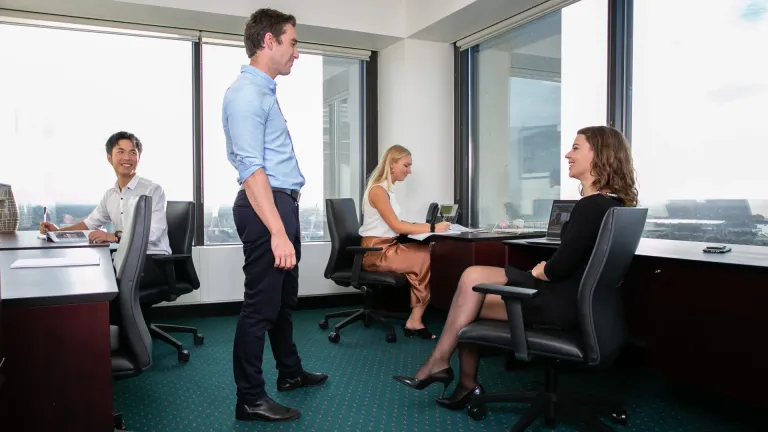
For many professionals, the question is no longer whether they need an office full time. It is whether they need a better place to work than their kitchen table, a noisy café, or a long-term lease that makes no sense for the way they actually operate. That is where a hot desk in Bangkok can be such a practical option. It gives freelancers, remote staff, consultants, and small business owners a proper working environment in the city without locking them into more space or commitment than they really need.
Bangkok Is A City Where Convenience Matters
Bangkok can be energising, but it can also be demanding. Travel time, traffic, heat, and the pace of the city all shape the workday more than people sometimes expect. That is why workspace choice matters here. A well-located hot desk is not only about having somewhere to open a laptop. It can make the day feel more manageable from the moment you arrive.
For people working across meetings, calls, client visits, or flexible schedules, the ability to drop into a professional environment without the burden of a permanent office is genuinely useful. You get structure when you need it, but you keep freedom over how often you use it. In a city like Bangkok, that balance can make a major difference to productivity.
There is also a psychological benefit. When work and home start blending too much, many people find their focus slipping. A dedicated workspace helps create clearer boundaries. You arrive to work, you get your head down, and you leave again without feeling as though the whole day has dissolved into one long half-working blur.
A Hot Desk Suits People Who Do Not Work The Same Way Every Day
One of the reasons hot desking has become more relevant is that modern work is rarely consistent from one week to the next. Some days involve deep focus and solo tasks. Others revolve around video calls, meetings, admin, or collaborative sessions. Many professionals simply do not need the same setup every day, so paying for a permanent desk or a full office can feel excessive.

Hot desking works well because it reflects that reality. It suits people whose workload is active but variable. A freelance designer may need a strong workspace three days a week. A consultant may want a professional base between client visits. A remote employee may only need a break from home working once or twice a week to reset their concentration.
This flexibility is especially valuable in Bangkok, where many professionals are working across international time zones, mixed schedules, or project-based roles. A hot desk gives them access to a work environment that feels stable without forcing them into a rigid model that no longer fits how they earn a living.
Professional Space Changes How Work Feels
People often underestimate how much the environment affects the quality of their work. It is not just about internet speed or desk size. It is about whether the space supports concentration, whether it feels appropriate for professional calls, and whether spending a full day there leaves you sharper or more drained.
Working from cafés can be appealing in theory, but it usually comes with compromises. Noise rises and falls unpredictably. Seating is not designed for long focused sessions. Privacy is limited. Calls can feel awkward, and even simple practical things like charging devices become a constant background concern. Home working has its own version of the same issue. It is convenient, but not always productive.
A hot desk offers a middle ground that often works much better. You still have flexibility, but in a setting that is built for work. That can improve concentration, create a more professional rhythm, and make even ordinary admin-heavy days feel more efficient.
It Can Also Be A Smarter Business Decision
For solo professionals and small teams, a hot desk membership can make financial sense in a way that goes beyond the headline price. A traditional office usually brings additional costs, setup, furniture, utilities, maintenance, and all the practical details that consume time as well as money. For many people, that level of commitment simply is not necessary.
A hot desk arrangement lets them stay lean while still working in a credible environment. That is useful not only for day-to-day tasks, but also for how the business presents itself. Meeting a client, joining a call, or working from a recognised workspace often creates a more polished impression than trying to manage everything from a casual public setting.
It also leaves room to adapt. If the business grows, the workspace arrangement can grow with it. If priorities shift, the commitment remains light. That is often the real strength of flexible workspaces. They support ambition without demanding unnecessary overhead too early.
The Best Workspaces Support Momentum
A good working environment should help people maintain momentum, not drain it away through small frustrations. In Bangkok, where the city already asks a lot from people in terms of movement and energy, that matters. A hot desk can provide a place to think clearly, work professionally, and stay connected to the pace of the city without being overwhelmed by it.
For many people, that is exactly what makes the model so useful. It is not trying to imitate a full office for everyone. It is giving individuals a better way to work on the days they need it most. When the setup matches the rhythm of real working life, productivity tends to feel less forced and much easier to sustain.